
|
|
|
Teaching Indigenous Languages |
|
| |
| books | conference | articles | columns | contact | links | index | home | |
 | |
Indigenous Languages Articles & Chapters |

|
Jon Reyhner This 2017 article in Babel: The Language Magazine looks at the negative effects of assimilationist educational efforts that sought to 'civilize' Indigenous peoples through English-only schooling. |

|
Jon Reyhner Based on evidence from indigenous language immersion programs in the United States, this Heritage Language Journal fall 2010 article makes the case that these immersion programs are vital to healing the negative effects of colonialism and assimilationist schooling that have disrupted many indigenous homes and communities. It describes how these programs are furthering efforts to decolonize indigenous education and helping further United Nations policies supporting the rights of indigenous peoples. The fit between place-, community-, and culture-based education and immersion language programs is described with examples from Apache, Ojibwe, Diné (Navajo), Hawaiian, and Blackfeet language programs, illustrating how traditional indigenous values are infused into language programs to help build strong positive identities in indigenous students and their communities. |
|
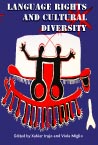
Jon Reyhner This 2013 chapter published in Language Rights and Cultural Diversity by the Center for Basque Studies at the University of Nevada and edited by Xabier Irujo and Viola Miglio examines the historical repression of Basque, Navajo, and other Indigenous languages by national governments and historical and current efforts to revitalize these languages. |
 |
Jon Reyhner This 2007 NABE News article argues that efforts to make English the Official Language of the United States and ban bilingual education are misguided and go against traditional American beliefs in freedom, including the U.S. Constitution's guarantee of freedom of speech. | 
| Jon Reyhner This 2006 Language Learner article criticizes the assimilationist rhetoric of Arizona congressman J.D. Hayworth and emphasizes the importance of American Indian traditional values for the health of American Indian students and communities. |
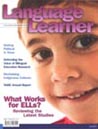
| Jon Reyhner This 2005 Language Learner article describes the negative effects of colonial assimilationist schooling on American Indians and the healing effects of efforts to revitalize Native languages and cultures. | 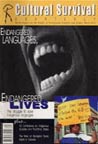
| Jon Reyhner This 2001 Cultural Survival Quarterly article examines the "English Only" Movement in the United States as exemplified by the passage of Proposition 203 in Arizona and 227 in California. It argues for language freedom and documents what is being lost through efforts to suppress indigenous languages. |
|
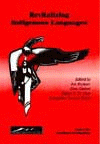
Jon Reyhner Drawing from papers presented at the five Stabilizing Indigenous Languages symposiums held since 1994 and other sources, activities are recommended for language revitalization at each of Joshua Fishman's eight stages of language loss. The role of writing in indigenous language revitalization is discussed, and two types of language use, primary and secondary discourse, are described. The conclusion stresses the importance of motivating language learners and using teaching methods and materials that have proven effective in indigenous communities. This article is the introduction to Revitalizing Indigenous Languages (1999). |
| Jon Reyhner and Edward Tennant Reviews research on maintaining and renewing American Indian languages and gives a rationale for the importance of maintaining them in terms of Native students' cross-cultural understanding. Joshua Fishman's theoretical paradigm for reversing language shift is summarized and tribal and national language policies are reviewed. Early childhood, elementary, secondary, and tribal college native language efforts are described along with Navajo and Yup'ik examples of school-based native-language maintenance/renewal efforts. Based on the research of tribal native-language renewal efforts and current research on second language teaching, specific suggestions are given for maintaining and renewing native languages. 1995 Bilingual Research Journal article. |
| Jon Reyhner Summarizes the history of government policy towards American Indian languages from colonial times to the passage of the Native American Languages Act of 1990 and links language policy to the academic success of American Indian students in terms of a subtractive English-Only curriculum that is designed to assimilate Indian children into the dominant culture of the United States versus an additive English-Plus curriculum that recognizes and values American Indian traditional cultures. 1993 Journal of Educational Issues of Language Minority Students article. |
 |
Jon Reyhner This 1990 paper describes a model K-12 Navajo/English maintenance bilingual program at Rock Point Community School in the Navajo Nation. This article is also available from ERIC: ED354772. |
|
|
| books | conference | articles | columns | contact | links | index | home |
|
| Copyright © 2019 Northern Arizona University, All rights Reserved |